
Fulton County Court Records After Arrest
The Fulton County arrest-to-court path usually starts with booking at CCNO. The jail creates the booking record, takes fingerprints and photographs, screens the person, and posts public roster data when available. The court record begins as the case moves to a judge and prosecutor. CCNO says newly arrested inmates appear before a judge on the next regular scheduled court day, often by video arraignment. At that first appearance, bond is reviewed, counsel is addressed, and the next court date is set.
Formal court records after a jail arrest are searched through the Fulton County Records Search page and the Fulton County Courts CaseLook portal. The county warns there can be a delay between filings, judicial action, and online posting. CaseLook also warns that data is current only within retrieval-system limits and can be altered, amended, or modified without notice. For the custody side of the same event, use Fulton County jail inmate records.
The county records search page points users to online court records and explains the delay warning.
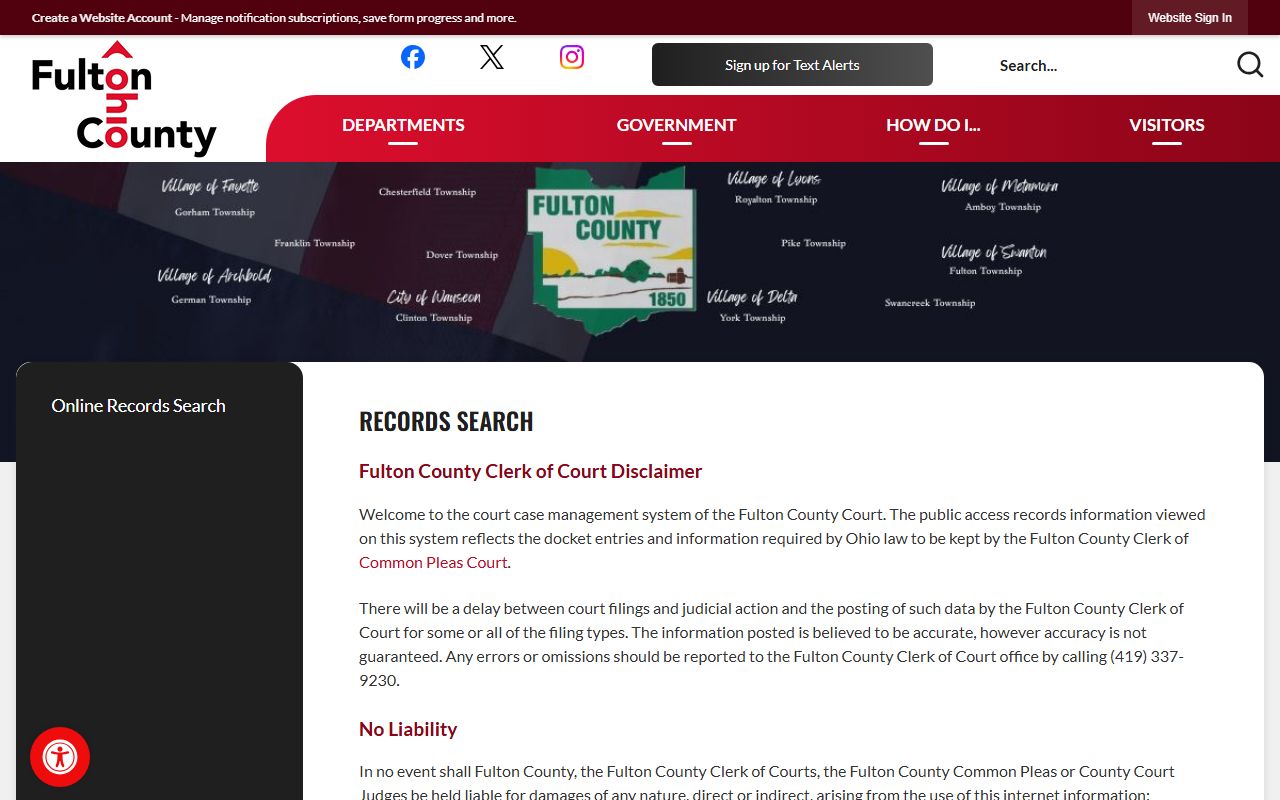
Use the court record for filed charges and docket activity, not as a substitute for live jail custody status.
Arrest Booking Court Record Path
The path is simple in broad terms but easy to mix up in practice: arrest, CCNO booking, first appearance, prosecutor review, formal case record, hearings, and disposition. The jail roster may show a charge and a court before the final charging decision is made. The prosecutor may file, amend, reduce, dismiss, or pursue charges by complaint, information, or indictment depending on the case. A docket entry is stronger evidence of the court case than a booking snapshot.
- Start with the CCNO active offender PDF or booking report.
- Copy the defendant name, booking number, booking date, arresting agency, case number, court, charge, severity, and status.
- Open Fulton County CaseLook and search by defendant name or case number.
- Compare jail charges to the formal court charge list.
- Contact the clerk or court if the portal is delayed, incomplete, or unclear.
CaseLook is best read with the jail record beside it. A roster entry marked "NO CASE#" can mean the case has not been posted yet, not that no charge exists.
Find Fulton County Court Records
The CaseLook agreement screen must be accepted before searching. The capture did not expose all field labels, but the research confirms the portal is used for public court records, and the jail roster gives search clues. Search by name first. Then try the case number from the CCNO record. Use the court label in the roster, such as Fulton County Common Pleas, Western District, or Eastern District, to decide which office can verify the record.
| Field or Channel | Type | Use | Notes |
|---|---|---|---|
| Agreement / Continue | Button | Required | Accept the CaseLook notice to proceed. |
| Name search | Portal field | Defendant lookup | Exact labels were not fully exposed in text capture. |
| Case number | Portal field | Direct docket search | Use case numbers copied from CCNO where present. |
| Case type or court | Portal filter | Narrow results | Match Common Pleas, Eastern District, or Western District context. |
| Verified records | Court request or visit | Official confirmation | CaseLook directs users to the court for verified data. |
The CaseLook disclaimer screenshot shows the portal's warning about delays and use at the user's own risk.
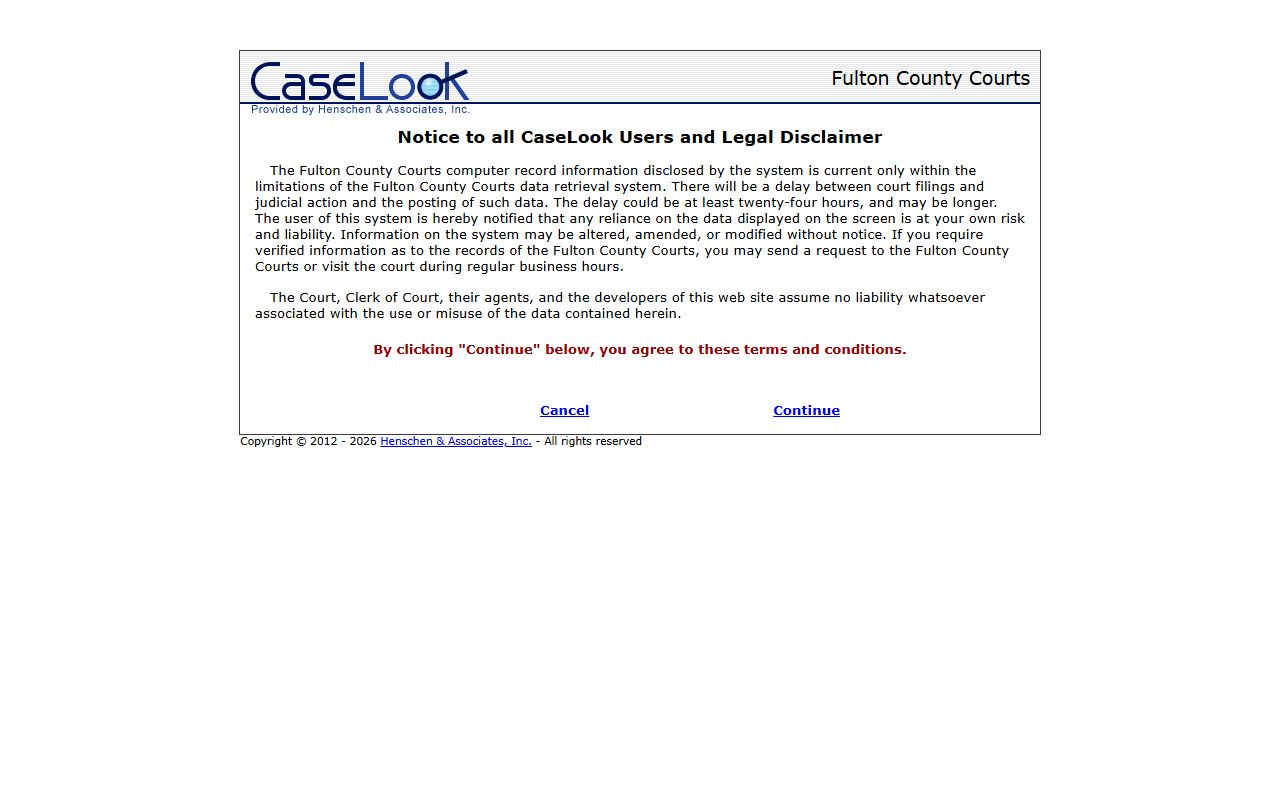
That warning is important when the arrest is new and court staff have not finished posting the docket.
Charges After Fulton County Arrest
A charge on the jail roster is not always the same as the final court charge. Roster charges are booking or custody charges received by CCNO from the arresting or court source. Court charges are controlled by the prosecutor and court. The prosecutor's office in Fulton County is led by T. Luke Jones, and the office has criminal, juvenile, appellate, civil, child-support, and tax work divisions. In a felony path, the prosecutor may pursue an indictment or other formal charging document.
| Document | Who Uses It | What It Does |
|---|---|---|
| Complaint | Law enforcement or prosecutor | Starts many criminal cases and states the alleged offense. |
| Information | Prosecutor | Formal prosecutor charge used where law and procedure allow. |
| Indictment | Grand jury | Formal felony charge returned after grand-jury review. |
The Fulton County Prosecutor directory lists the office, hours, staff, and victim advocate.
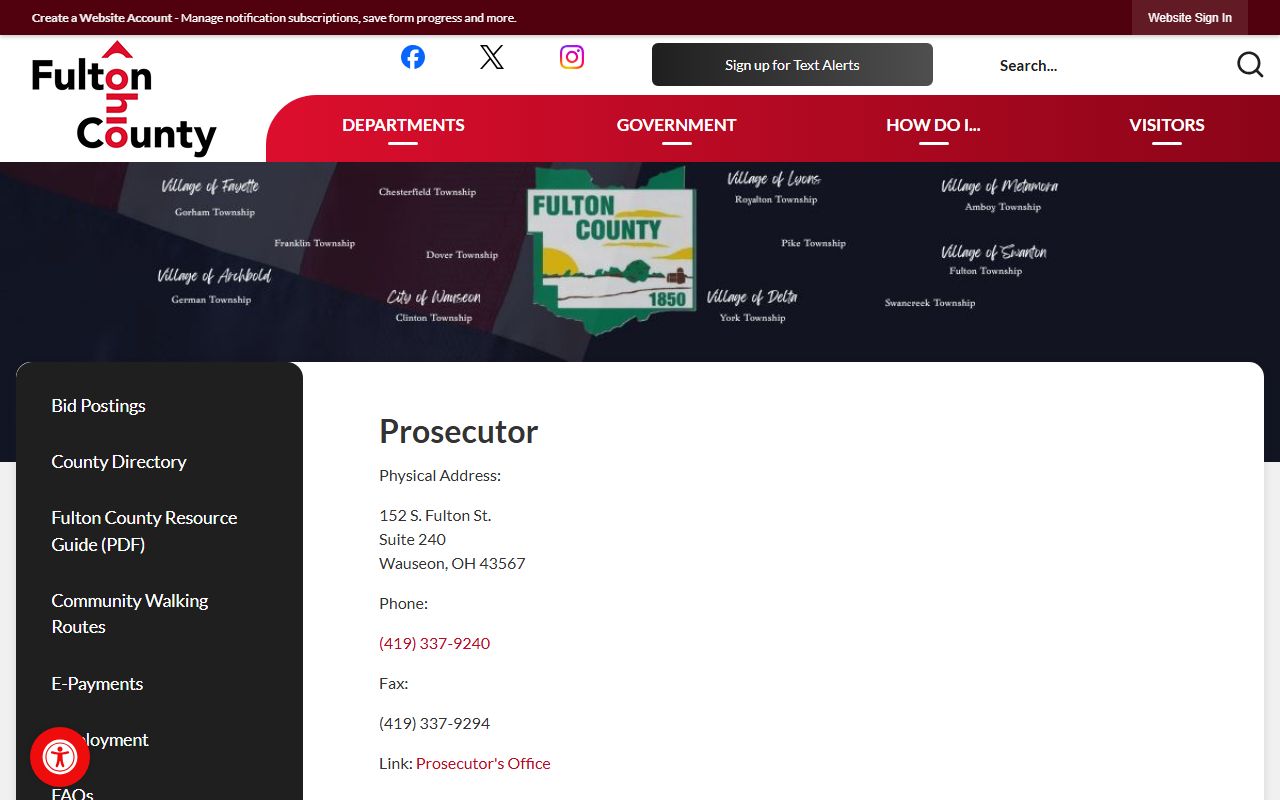
When a charge changes after booking, the prosecutor and court docket are the right places to verify the active court record.
Fulton County Charge Status
Charge status describes where an accusation sits in the court process. A person can be arrested and charged but not convicted. Charges can be amended, reduced, dismissed, indicted, or resolved by plea or verdict. CCNO sample records also show jail status terms such as pretrial, sentenced, prison, holder, and must return. Those are custody or jail status terms, not always final court outcomes.
| Status | What It Means |
|---|---|
| Pending | The case or charge is still open. |
| Amended or reduced | The filed charge changed from the original version. |
| Dismissed | The court record shows that charge or case did not proceed. |
| Indicted | A grand jury returned a formal felony charge. |
| Sentenced | A court imposed a jail, prison, supervision, or other sentence. |
| Holder | Another agency, court, or jurisdiction may control release. |
Bond After Fulton County Arrest
Bond information can be split between CCNO, CaseLook, and the issuing court. CCNO's First 48 Hours page says arraignment reviews bond, counsel, and the next court date. If bond is not shown in a roster entry, search CaseLook, call CCNO, or contact the court. For Common Pleas criminal cases, the Clerk of Courts Legal Division lists 419-337-9230. For Western District criminal or traffic matters, the page lists 419-337-9212 and says press #3.
| Bond Type | How It Works |
|---|---|
| Recognizance | Release based on a written promise and court conditions. |
| Cash bond | Money paid under the court's order. |
| Surety bond | A commercial bail agent posts surety where accepted. |
| Deposit bond | A court may allow a percentage deposit depending on the order. |
| No-bond hold | Payment alone will not release the person until the hold changes. |
Note: A Fulton County bond may not release a person if another county, ODRC, USMS, or a court holder remains active.
Warrants and Court Records
No official Fulton County Sheriff's Office active warrant search database was located in the official sources reviewed. Warrant-related court records can still appear in CaseLook when a bench warrant, failure-to-appear entry, or criminal case is docketed. The sheriff's office phone is 419-335-4010. The clerk or issuing court can verify court-controlled warrant and hearing details. Do not treat the absence of an online warrant list as proof that no warrant exists.
- Arrest warrant
- A court order authorizing arrest on a criminal charge.
- Bench warrant
- A court order often tied to failure to appear or comply.
- Search warrant
- A separate order to search a place, person, or property.
- Detainer
- A request by another agency to hold or notify before release.
Charges vs Convictions
A court record after arrest may show charges even when no conviction has occurred. Ohio and Fulton County records should be read with that distinction in mind. A charge is an accusation or filing. A conviction follows a plea, verdict, or other final finding. The CCNO disclaimer also repeats the innocent-until-proven-guilty point for jail roster users.
| Charge | Conviction | |
|---|---|---|
| Stage | Accusation or formal filing | Final finding by plea or verdict |
| Where Found | Jail roster and court docket | Court disposition and sentencing record |
| Can Change | Yes, amended or dismissed charges are common | Changes only through later court action |
Sealed vs Expunged Records
Sealing and expungement questions belong with the court and an attorney, not the jail roster. The research file did not provide a Fulton-specific eligibility chart. In practical terms, a sealed record is hidden from ordinary public view, while expungement is a stronger remedy where the law allows it. If a case was dismissed or later sealed, ask the clerk and originating agency how the order affects jail, court, and booking-photo records.
| Sealed | Expunged | |
|---|---|---|
| Public visibility | Generally hidden from routine public search | Treated more like removal where allowed by law |
| Agency access | Limited official access may remain | Access is more restricted but depends on law |
| Next step | Use the court case and sealing order | Use the court order and originating agency process |
Fulton County Records Limits
Ohio Rev. Code 149.43 is the public-records baseline, but not every criminal justice record is released. CCNO lists medical records, confidential law-enforcement investigatory records, protected source or witness information, confidential techniques, safety-risk data, records prohibited by law, and Social Security numbers as confidential or unavailable. The prosecutor's public-records page also says criminal-case records requests cannot be honored or completed until after the file is closed.
That limit matters for court records after a jail arrest because new cases can involve pending investigations, unfiled material, juvenile records, sealed documents, or redactions. Online CaseLook is useful, but verified court information may require a request to Fulton County Courts or a visit during business hours.